AI Has Been in Your Classroom Longer Than You Think
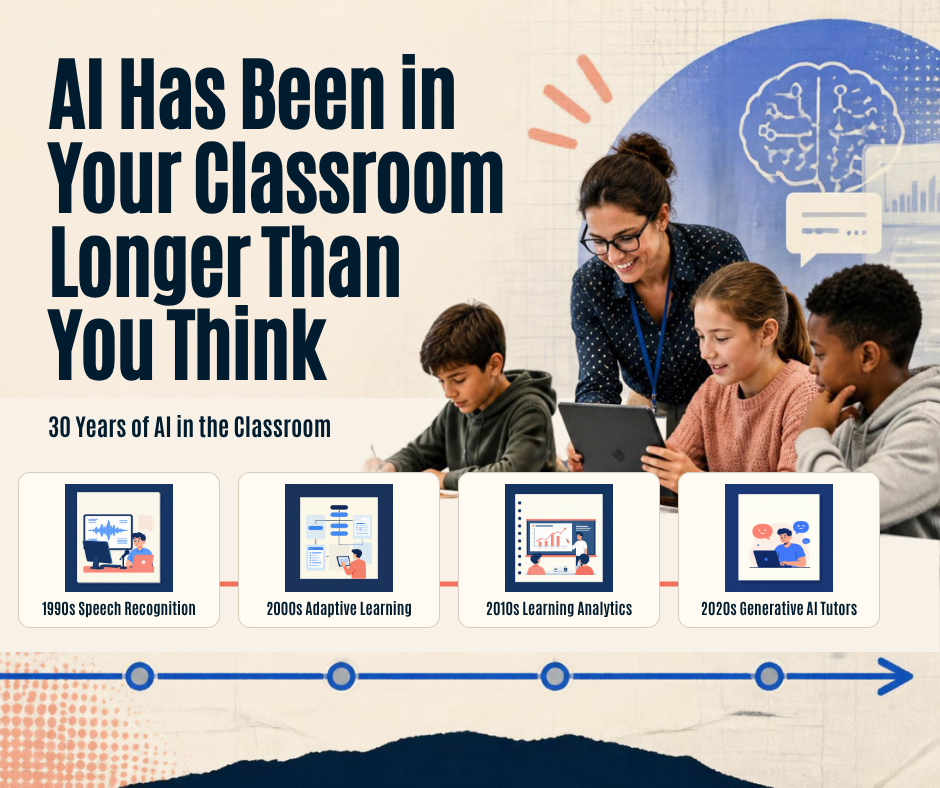
Spell check is AI. Grammar suggestions are AI. AI in the classroom isn't as new as it feels, and that matters for how you teach with it.
Every time a student's word processor underlines a misspelled word, that's AI. Every time it suggests a clearer way to phrase a sentence, that's AI too. None of that is new, and none of it caused a moral panic. AI in the classroom isn't the brand-new problem it feels like.
There's a common assumption floating around right now that AI does a student's thinking for them, full stop, as if the tool replaces the student rather than supporting them. Spell check never did that. It caught errors and offered options, and the student still had to decide what to write and whether the suggestion actually fit. Grammar tools work the same way. Generative AI can do more than either of those every could, which is exactly why this feels different. But "can do more" and "does the thinking for you" are two different claims, and only one of them has any evidence behind it.
AI didn't just show up in classrooms. It's been there for decades in smaller forms. What's differnt now is what students have access to. Think about what it used to take to get a clear explanation of a hard concept, or feedback on a rough draft, or a second opinion on an apprach to a problem. Usually that meant finding the right person at the right time, or having resources on hand that not every student had. AI put something closer to an encyclopedia's worth of knowledge at every student's fingertips, and that's not the same thing as Googling a fact. It's closer to being able to ask a question, get a real answer, ask a follow-up, and keep going until something clicks. The skill that matters now isn't finding information anymore. It's knowing how to prompt, how to create, how to teach yourself with the tool sitting right there. That's a genuine shift. It's just not the shift most of the current fear is about.
A lot of that fear treats AI like it appeared out of nowhere and now threatens to hollow out thinking that used to be safe. That story skips the part where tools have quietly done pieces of academic work for decades, and it skips a more useful question: which uses build a student's thinking, and which ones let them skip it. Some students will use AI like an answer machine, a way to get the output without doing the sythesizing. But the fix isn't to pretend AI is new and dangerous in a way spell check somehow never was. The fix is teaching students to notice when a tool is helping them think, versus helping them avoid thinking.
If you're introducing AI use to students, or explaining a policy to parents, "this is unprecedented" tends to raise fears without adding much clarity. It's more accurate, and more useful, to say that tools supporting student thinking aren't new, this one is just more capable, and the job now is teaching kids to use that capability well.
Next time a student or a parent treats AI like an entirely new threat, try naming the continuity instead. Spell check, grammar tools, calculators, all the same basic question underneath: is this helping a student think, or replacing the thinking they needed to do.
Join the Email List
No fluff, no spam. Just strategies, resources, and updates worth opening.