Classroom scenario
Look Back
Look back at Lesson 1.4. A coach wants a tool to help summarize observation notes from three classrooms. Which approach follows the privacy rule?
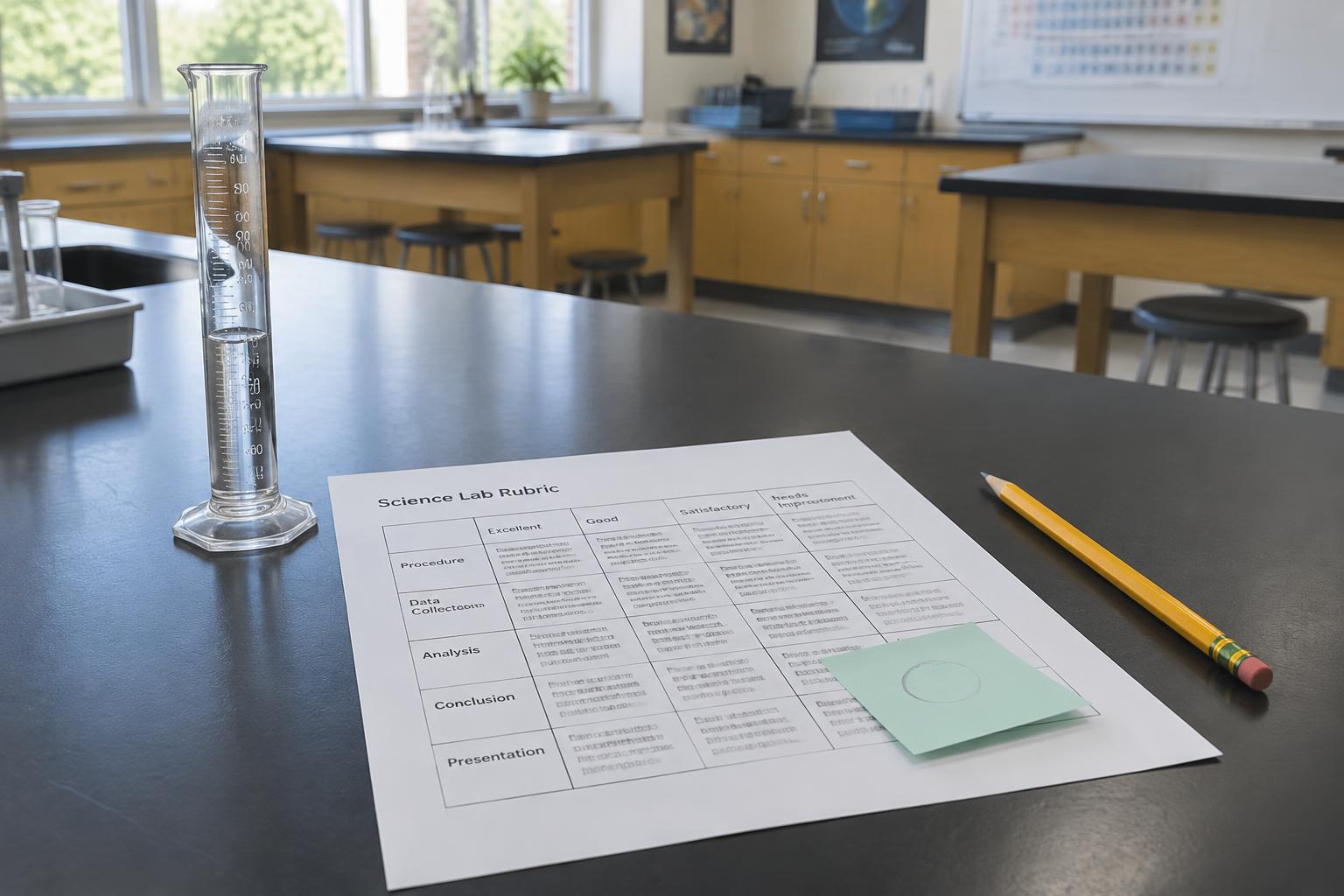
Ms. Solis is a good teacher and the most enthusiastic user of AI in her building. Last week she had a tool write lab rubrics for the whole unit. It took ten minutes. She is proud, and she is right to be: she used to spend a weekend on them.
Mr. Osei read the rubrics. One line read: "Density is calculated by dividing volume by mass." It is the wrong way around. Density is mass divided by volume. Her students will be graded against a rubric that tells them to do it backward.
Four Principles for Racing
Honor the gain first. The time she saved is real. If you minimize it, she will stop listening.
Do not lead with the error. She will defend the tool or feel ashamed. Neither moves her.
Make the check visible. A step she can see herself doing is easier to adopt than a warning.
Let her find the gap. An error she discovers is more persuasive than one you announce.
The Conversation, Annotated
| Mr. Osei says | What he is doing |
|---|---|
"Ten minutes for a whole unit is a big win. Tell me how you decided they were ready." | Honors the gain and asks about the check, without implying there wasn't one. |
"So you read them through and they looked right." | Says it back, and learns what her check was. |
"I'd like to try something with you. Take the density rubric and tell me, line by line, where each statement would show up in a student's lab." | Makes the check concrete. She is asked to trace a statement to the lab, not to find a mistake. |
(She stops at the density line.) "That's backward." | She finds it herself. |
"What would you want to have done before the rubric went to students?" | Invites her to design the check, and does not hand her one. |
Ms. Solis laughed. "I would have graded them on a backward formula." She wrote a three-line check on a sticky note: read each line, trace one claim to a source, ask someone to read it cold. The step was hers, and it took four minutes.
What Not to Do
| Move | Why it fails |
|---|---|
Opening with a warning about AI errors. | She hears criticism of a choice she is proud of. |
Reading the error aloud as soon as you find it. | It becomes your finding, not hers. |
Asking her to stop using the tool. | You have no basis, and she will route around you. |
Sharing the error with others as an example. | You break the agreement, and she stops showing you her work. |
Classroom scenario
Try the coach’s next move
A colleague uses AI to produce a full unit of materials in an hour and shares them proudly. You notice an error. What is the best first move?
Branching scenario
The Conversation Branch
You are the coach. Ms. Solis teaches seventh grade science and is eager and fast. She used an AI tool to make a lab report rubric in ten minutes and asked you to look at it with her. You have read it. The line about density is backward, and Ms. Solis does not know.
Pick what you would say next. No choice ends the scenario. If a choice goes wrong, Ms. Solis reacts, and you get a chance to repair it. At the end you see which moves you made and what each one did. Takes 6 to 8 minutes.
Ungraded practice · No effect on your course score or certificate.