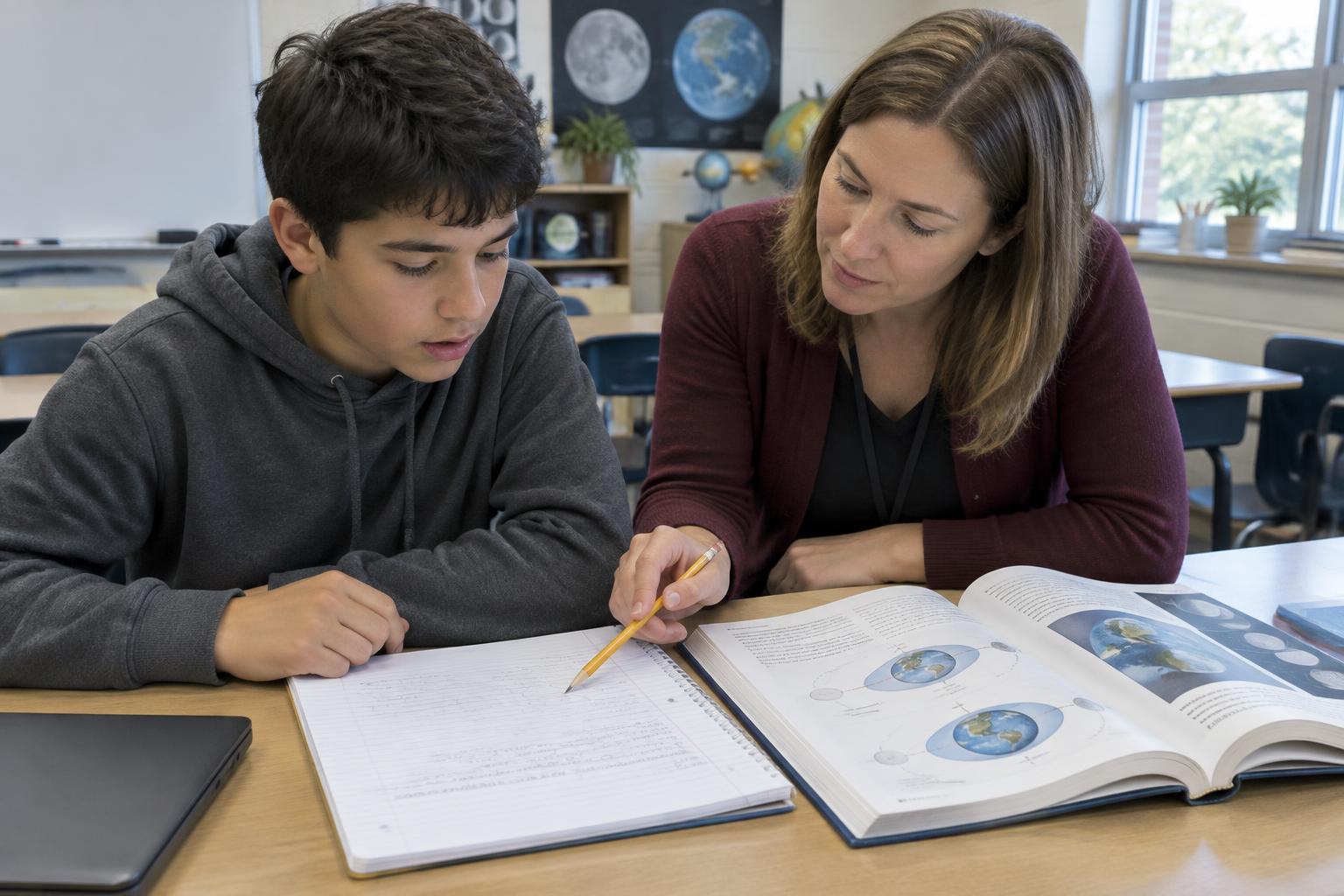
Classroom scenario
Look Back · Retrieval practice
From Lesson 3.1: Which kind of error is an invented book title in an AI-written citation?
Jordan has a new assignment, and this time he has the PAUSE routine in his head. His social studies teacher asks for a claim about a historical event with evidence. He asks an AI tool for help and gets a clean paragraph with a statistic in it.
He gets to the Spot-check step and stalls. "Check it where?" he asks himself. He has never been shown what checking looks like. He opens a second tab, types the statistic, and clicks the first result. It repeats the same number. He feels done.
Ms. Kowalczyk, looking over his shoulder later, asks one question. "Where did that second page get its number?"
Jordan looks. The page cites the same chat tool he started with.
Two pages that agree prove nothing when one copied the other.
What Makes a Second Source Count
A second source adds evidence only when it comes from a different place. Students need a short test.
| Question | Why it matters |
|---|---|
Does it come from a different place? | A page that copies the first claim adds nothing. Look for a source with its own evidence. |
Who made it, and why? | A named author, organization, or publisher is easier to evaluate than an unsigned page. |
Does it show where it got the claim? | A good source points to its own evidence, and you can follow the trail. |
Does it agree with a third place? | For a claim that matters, a third source breaks ties. |
The Routine by Band
Ask a book or a grown-up. After an AI answer is read aloud, ask: "Where could we check?" Students choose a picture book, a poster, or a trusted adult. The teacher models the check.
Rehearse It
Habits form through repetition with a clear, small task. A five-minute weekly rehearsal beats one long lesson.
Monday claim. Post one AI-generated claim related to your unit. Half of the claims you post should be true, so students learn that checking sometimes confirms.
Check in pairs. Pairs find one second source in four minutes and use the frame.
Share out. Two pairs report. Ask each: "How do you know your second source is independent?"
Branching scenario
Jordan's Two Tabs
You are Ms. Kowalczyk during seventh-grade work time. Jordan has found two matching pages and thinks he is finished. Decide what to ask, which evidence to inspect, and how to close the conference. The pages and claims are fictional practice materials.
Ungraded practice · No effect on your course score or certificate.
Classroom scenario
Knowledge Check
A student checks an AI-written statistic by searching it, and the top result shows the same number. What should the teacher ask next?
Think of a claim from your own subject area that students might copy from an AI tool without a second glance.
Next: Building a Spot-the-Error set for your own subject and grade band.